Gamersclub
Selling a boost without breaking the ranking
ClientGamersclub
RoleProduct Designer
Timeline2021
Responsibilities
– End-to-end design of Desafio RP and the Coins Store– Qualitative research and market benchmarking– Cross-team alignment across marketing, CX, and experience– Beta strategy, surveys, and data analysis with the data team– Delivered against the Gamersclub design system and accessibility standards
Overview
I was the designer for Gamersclub's Coins Store, and Desafio RP was the product I led end to end. A recurring boost that became the store's best-selling product ever, without unbalancing the ranking the platform is built on.
10x
Monthly store revenue4x
The quarterly sales goal2.23
Purchases per player in 30 days60%
Share of store revenue for 5 straight monthsGamersclub, Rating Points, and a store that needed a hit
Context
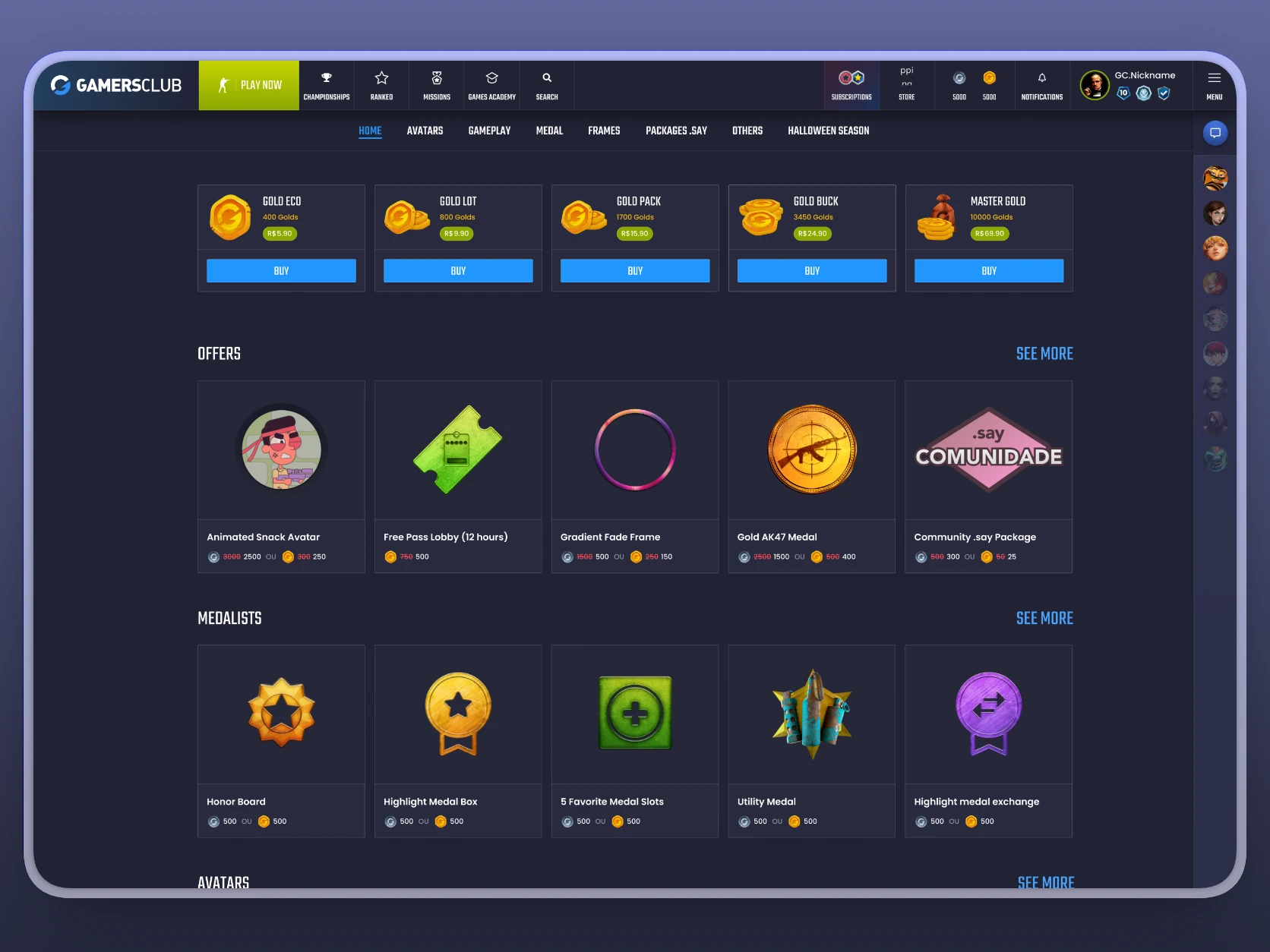
Gamersclub is the largest esports platform in Latin America, with more than 3 million players. Subscriptions were the main revenue source, and the Coins Store, our microtransactions storefront, existed to diversify it.A second line of income that did not depend on renewals was the strategy. Delivering it was the problem.
A store of one-time purchases can't pay for itself
Problem
The Coins Store sold mostly cosmetics. Cosmetics are bought once, so revenue was unpredictable and the store ran on a treadmill of new releases. We paid to bring players in, they bought one item, and they left.At around R$38K a month, the OKR was blunt: one product with 1,000 units sold in 15 days. The real target was harder than the number. A product players would come back to buy.
Players didn't want more items, they wanted to level up
Research insight
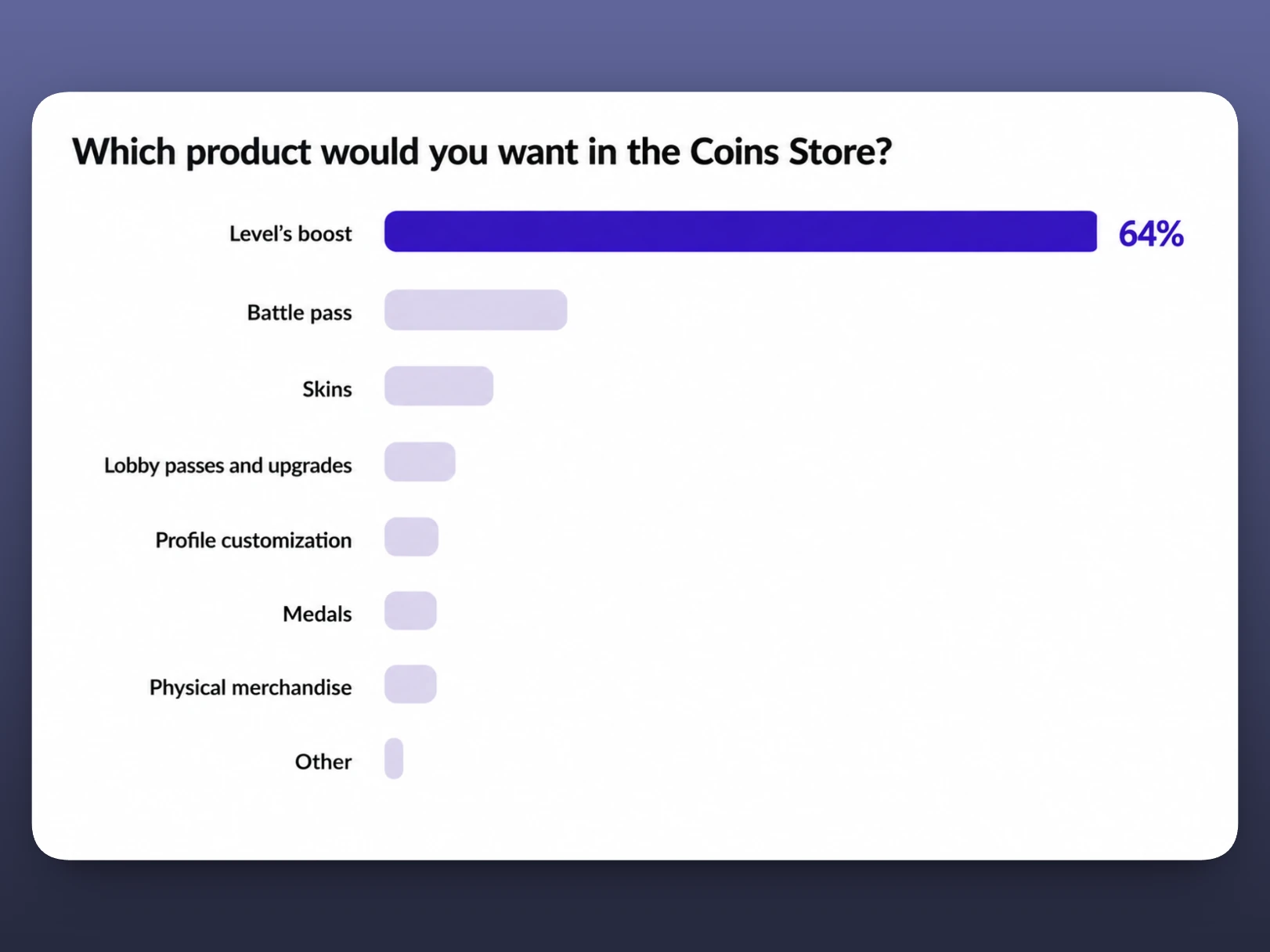
I surveyed the community across every product type that worked in other game stores. 64% chose the same thing, an item that doubled the points earned in their matches.They were asking for a multiplier on Rating Points, the score that defines a player's level. On a competitive platform your level is your identity, which made this the most dangerous thing the store could sell.Benchmarking made the risk concrete. FACEIT, Rainbow Six, and Call of Duty all sell boosts, but they multiply shop currency or progression. None of them multiply the ranking itself.
Everyone had already watched this go wrong
Risk
Doubling points was not a new idea at Gamersclub. Marketing had run a double points event without asking the community, and CX spent weeks absorbing the complaints. Nobody wanted to try it again.Twelve meetings later, every objection came down to the same fear: doubling points would distort the ranking and turn Gamersclub into pay to win. That fear became the brief. This is the product that came out of it.
The decisions that made a boost safe to sell
Decision 01
We designed for recurrence, not another item
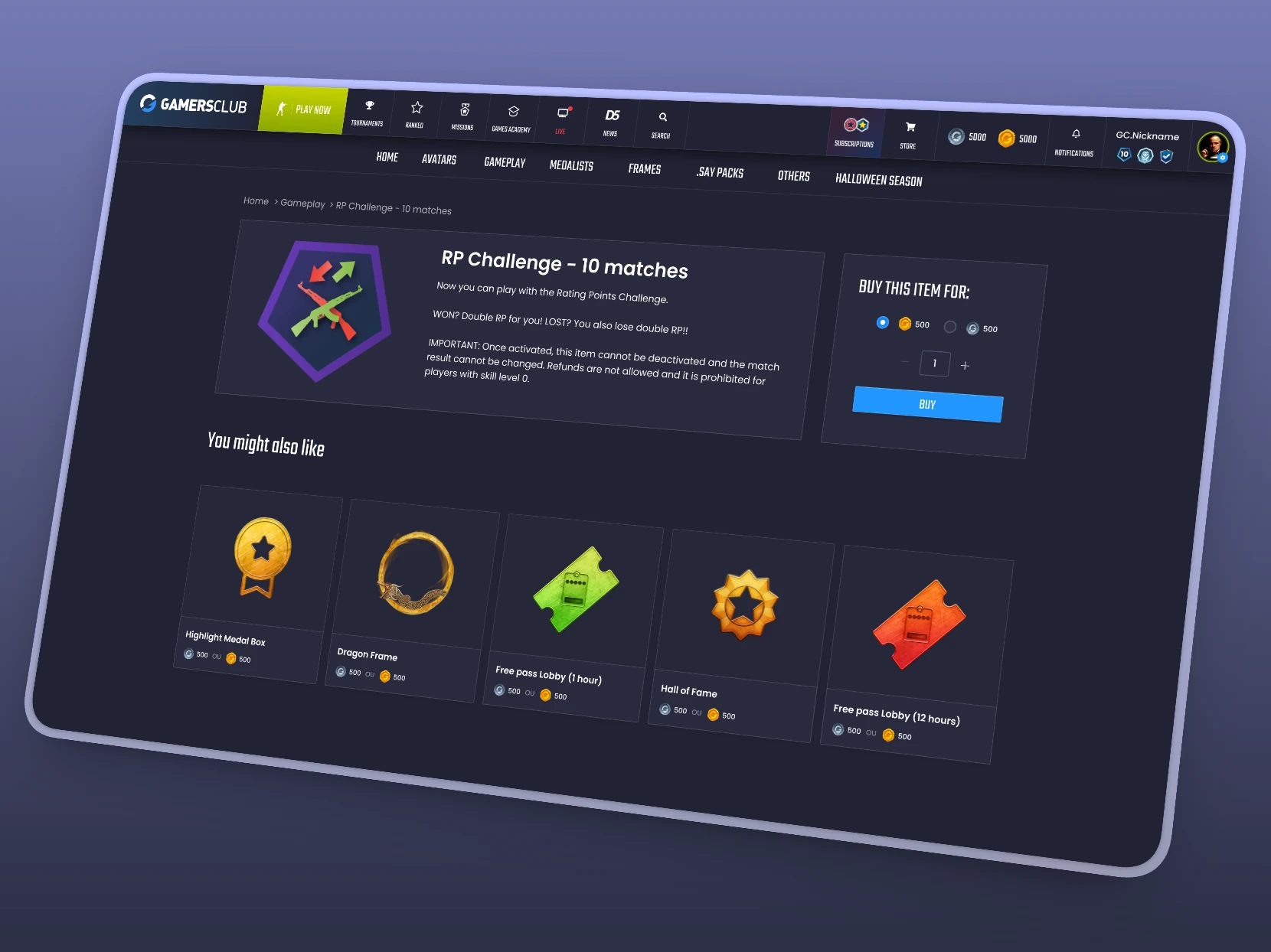
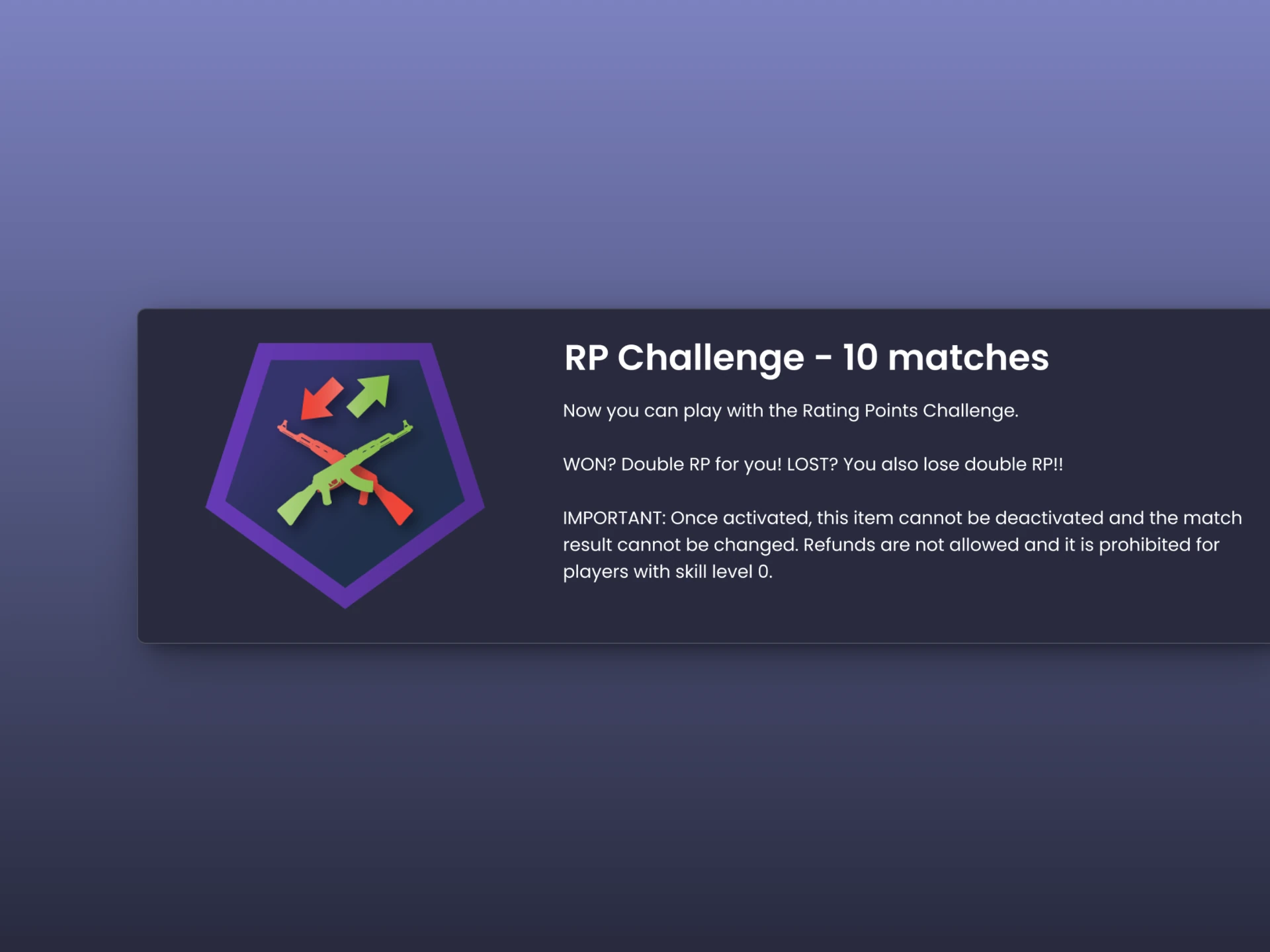
An expiring product covering a set number of matches. When it runs out, the player buys again.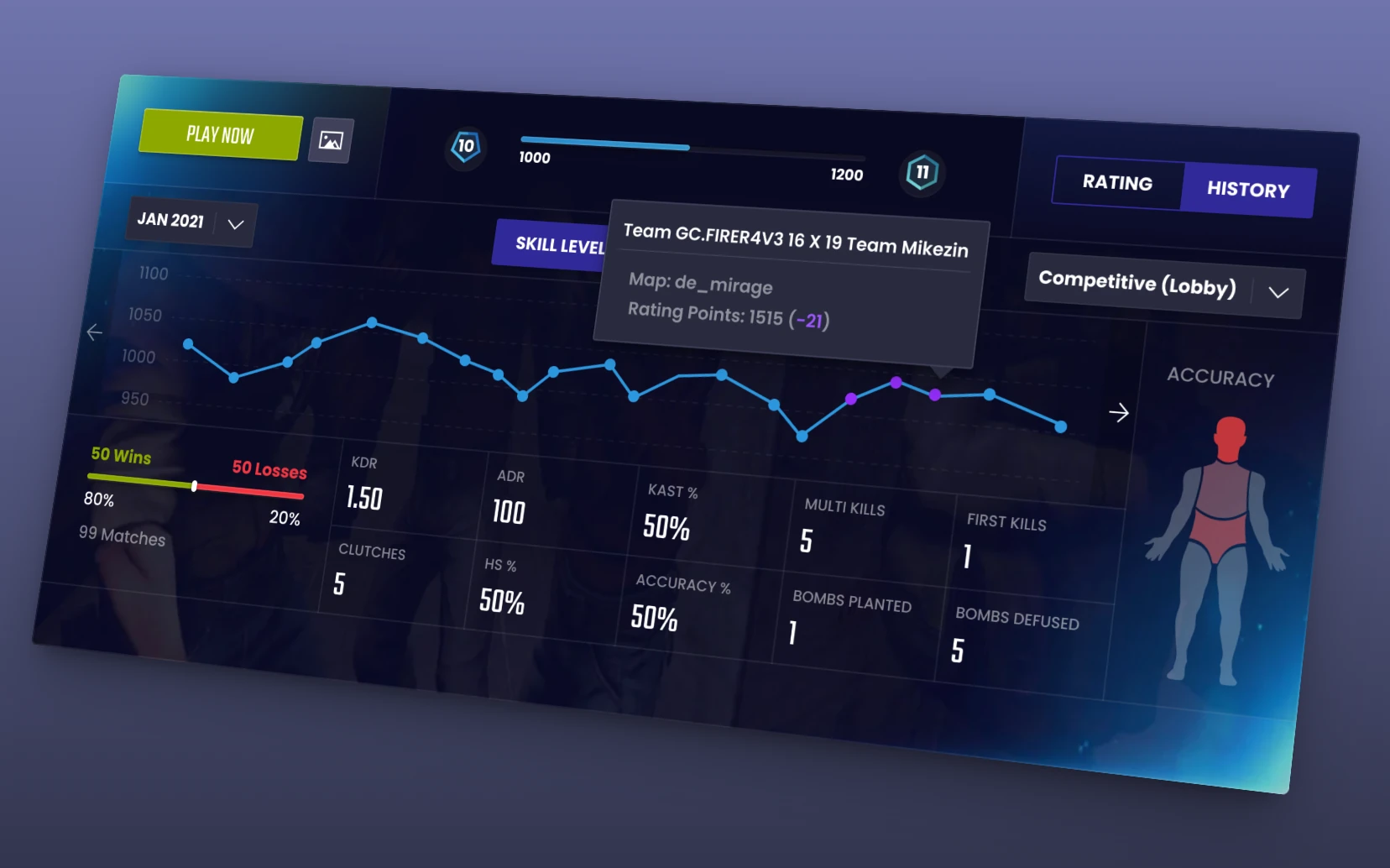
Decision 02
We made losing cost double too
Double points applied to defeats as well, which kept the ranking mathematically intact.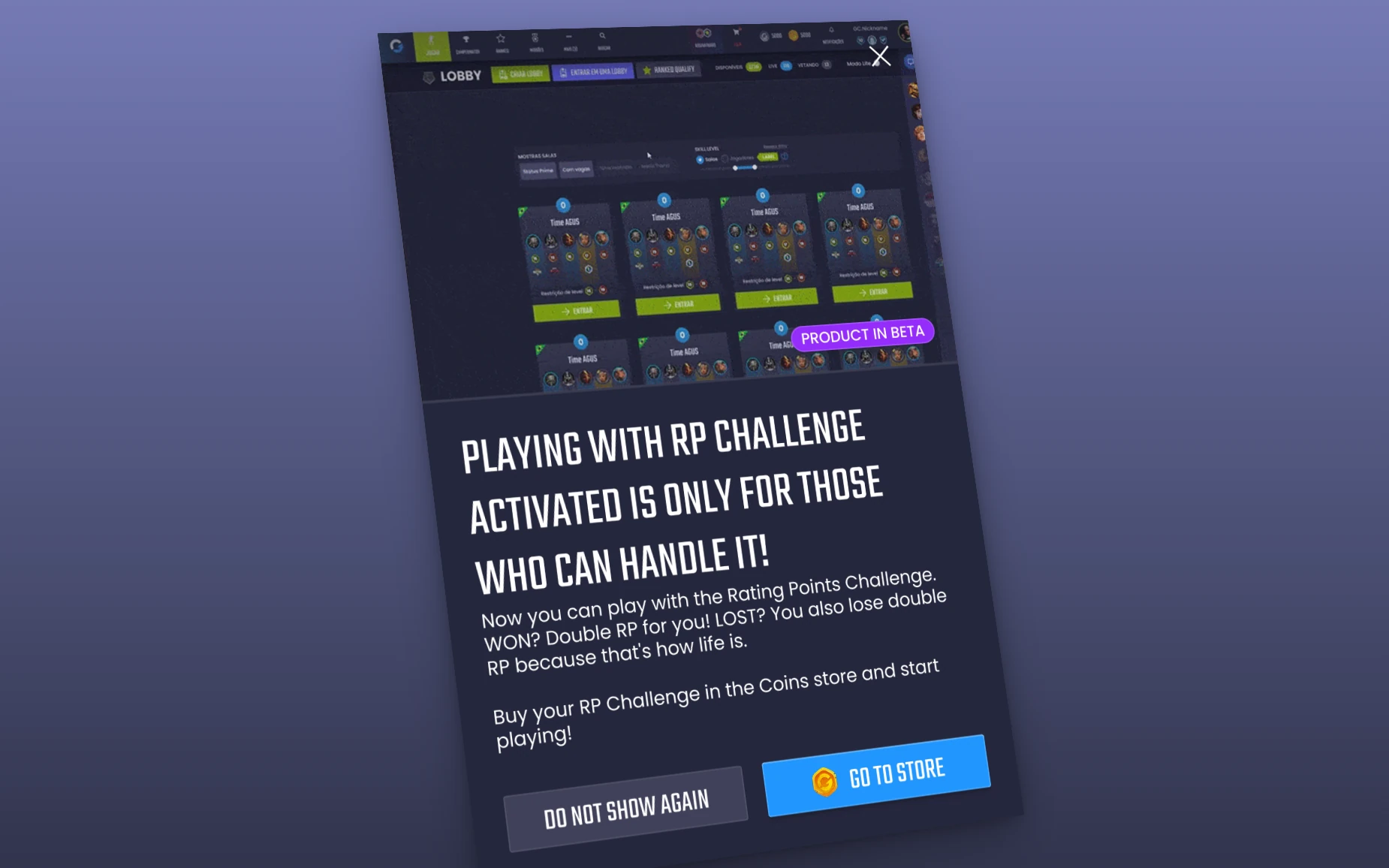
Decision 03
We turned it into a bet on yourself
The product stopped being a boost and became a self challenge. Players were betting on their own skill.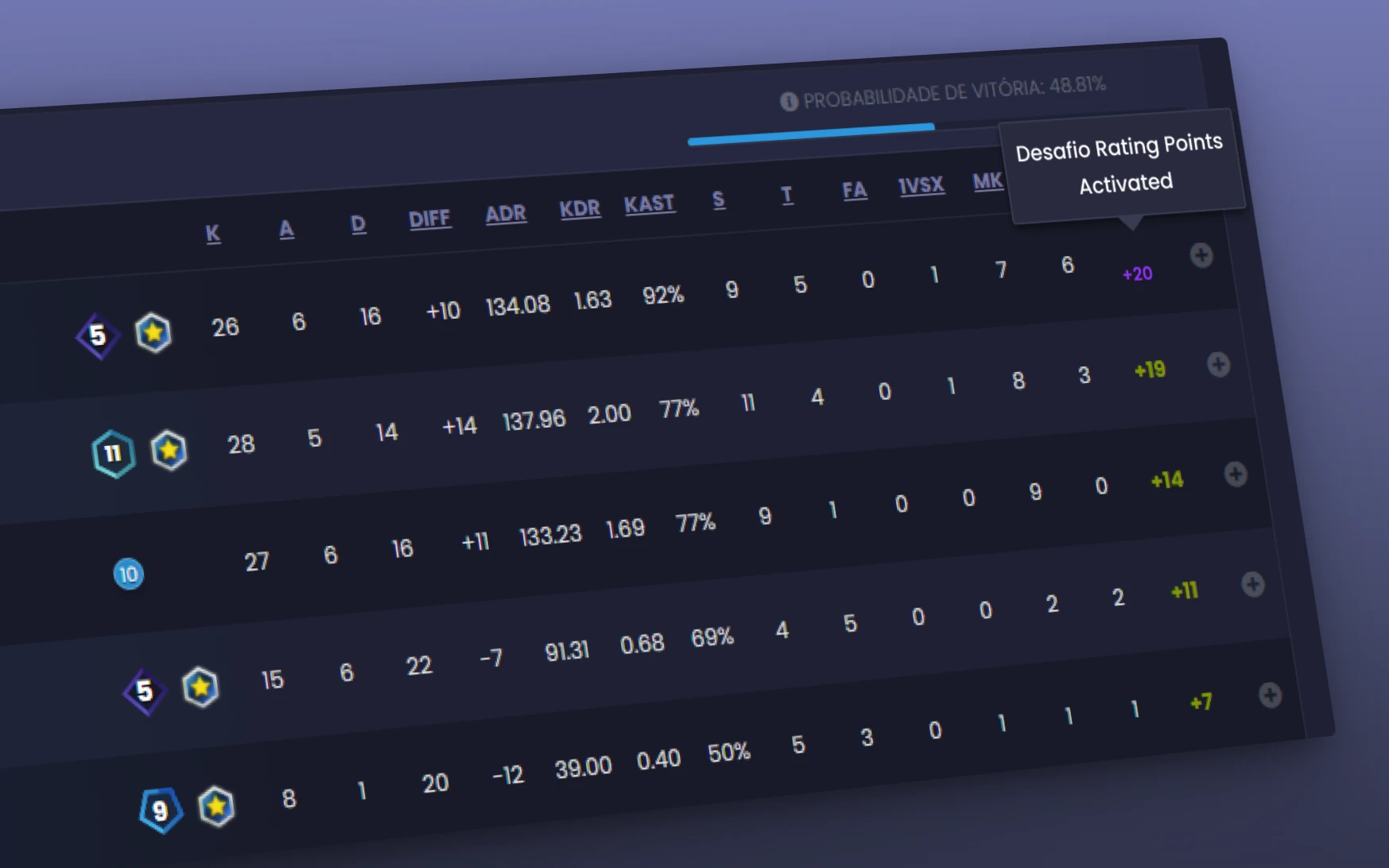
Decision 04
We made the boost public inside the match
Active challenges show on the post-match scoreboard. The purchase became public, and the lobby became our biggest discovery channel.Fifteen days to prove it would not break the ranking
Validation
We shipped it silently. Fifteen days in the store, no announcement, no marketing. If it could not find its own audience, we wanted to know quietly.We asked for a dashboard before launch and compared buyers against everyone else. The ranking held: buyers played more and their skill level spread tightened instead of widening. The beta rewrote the launch too: three package sizes, lower prices, and a go to market built around the lobby.
+8%
Matches played per buyer21,855
Matches with the challenge active84.2%
Buyers who would buy again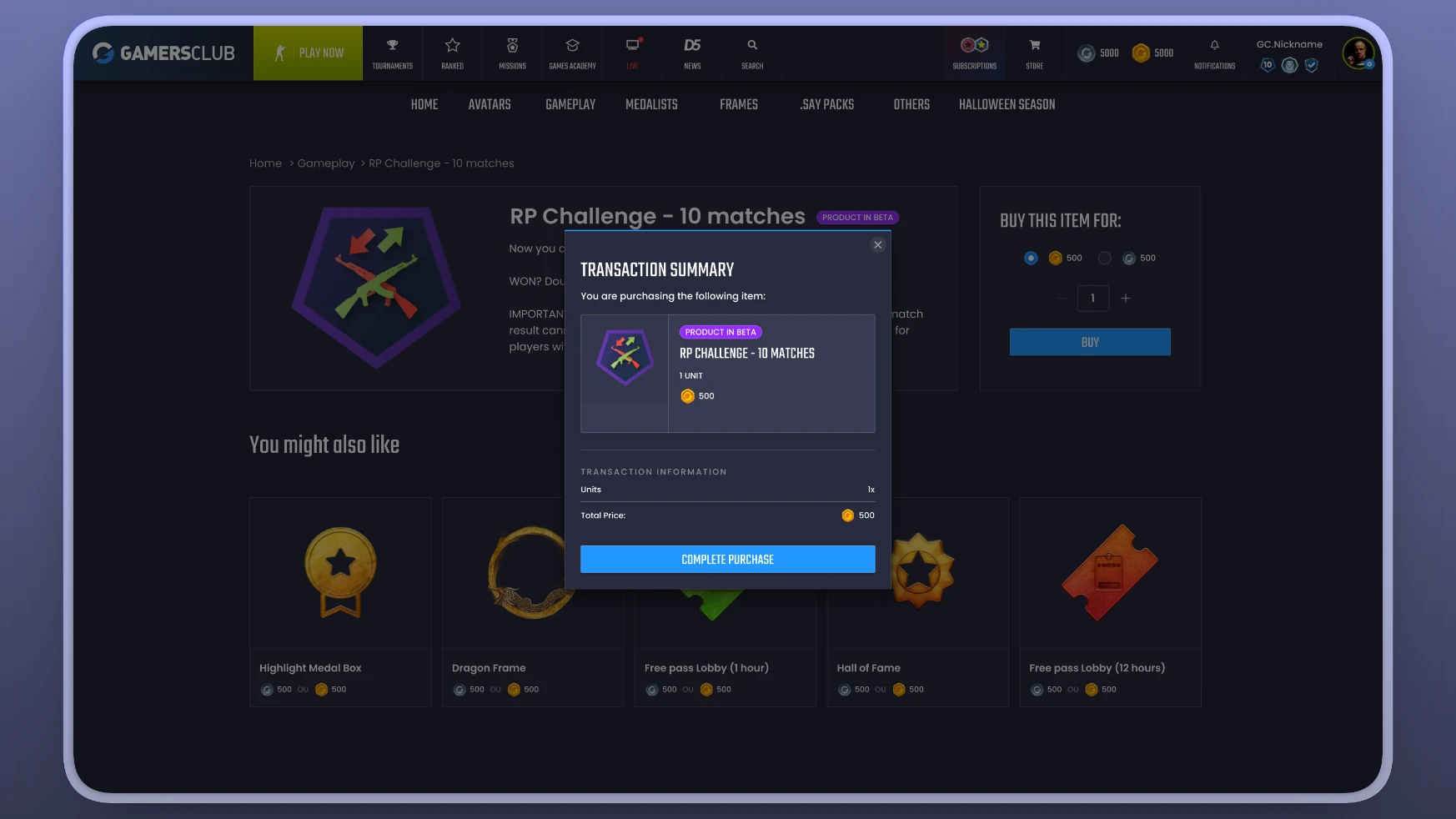
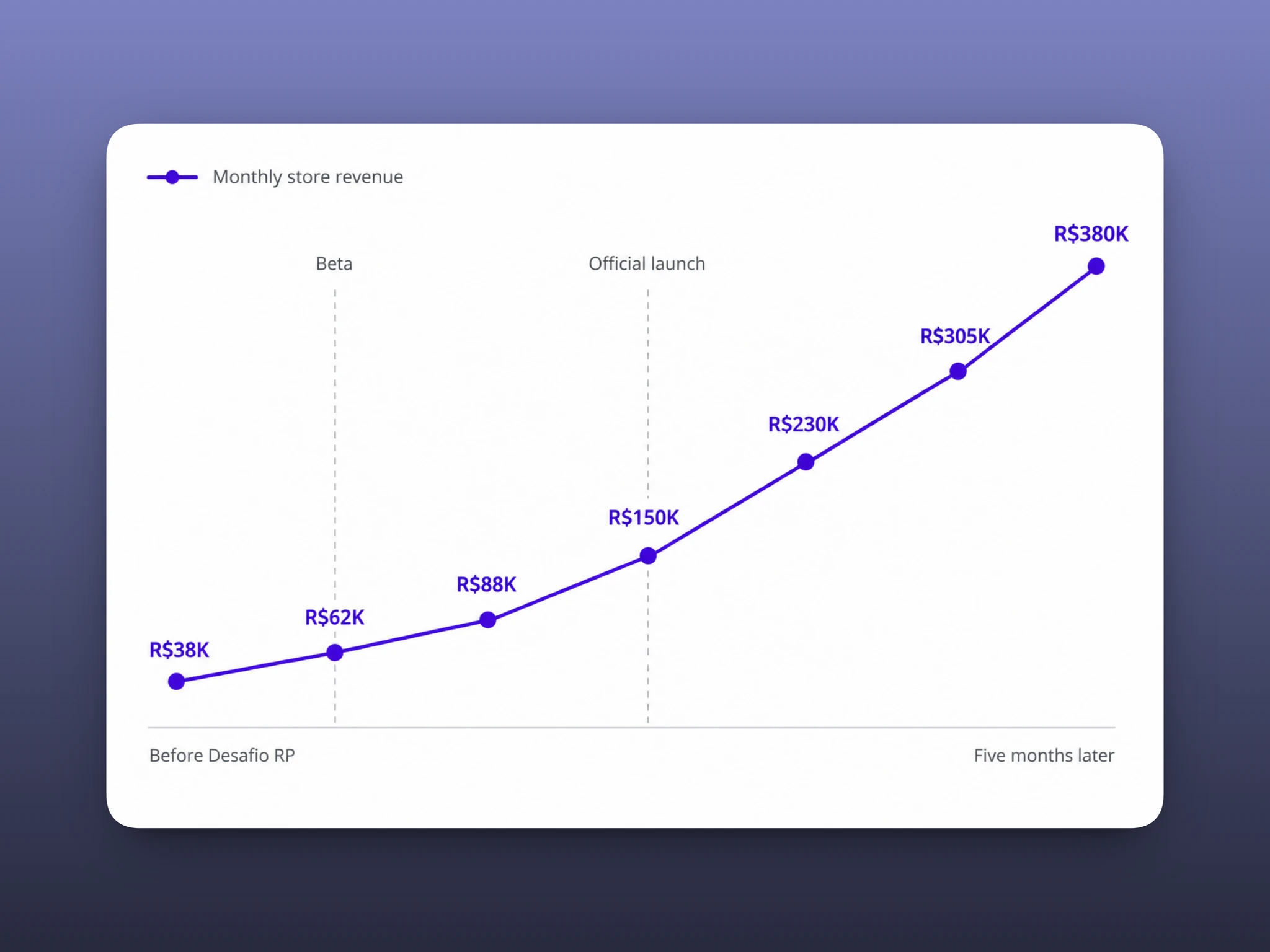
From R$38K to R$380K a month
Outcomes
Desafio RP launched and became the best-selling product in the store, holding that spot for five straight months. Monthly store revenue went from R$38K to R$380K.Years later it is still core to the platform: brand partnerships, subscription benefits, missions, and special editions of up to 50 matches.
What a game economy taught us about product design
Reflection
Objections are a briefOther teams told us every way this could fail. Each reason became a constraint the product shipped with.
We are not our usersWe assumed players wanted an easier climb. They wanted a harder one, and that is what sold.
A small test ends a long argumentFifteen quiet days settled a debate that twelve meetings could not.
We didn't sell an advantage. We sold a challenge.
Next projects
All work